Kiskéyà.
The people of Kiskéyà are one, and western Kiskayans—whom many know as Haïtians—are a Latīné people like any other.

Click here for the French and Spanish-language versions.
As an Afro-Latīné man with roots in both Cuba and Kiskéyà, this one’s personal for me. Please tell me you watched the Benito Bowl last night. His performance is above—already past one million views.
Latin America is often described as a vast mosaic of cultures and histories. But some pieces are intentionally left out. The clearest omission is Kiskéyà1—the island today divided between what is now called Haïtí2 and the Dominican Republic.
By geography, colonial inheritance, and hemispheric influence, Kiskéyà belongs within Latin America. Its exclusion, however, is not a mistake. It reflects how anti-Blackness and colorism have shaped what it means to be Latīné.
The revolution of western Kiskéyà remains the hemisphere’s most decisive break with empire. Black Kiskayans, led by Toussaint L’Ouverture and Jean-Jacques Dessalines, rose against France, destroyed slavery, defeated Napoleon’s forces, and declared independence in 1804. Laurent Dubois calls it the most radical of the age’s revolutions because it abolished slavery outright and enshrined racial equality in law.3
Michel-Rolph Trouillot reminds us it was unthinkable even as it happened.4 That unthinkability still lingers, as the Latīné world struggles to accept Black sovereignty at the core of its identity.
THE REVOLUTIONARY LEGACY OF WESTERN KISKÉYÀ
The term Latin America was invented in 19th-century France to bind together colonies of Spain, Portugal, and France under the umbrella of a common Latin heritage. By that definition, western Kiskéyà is unquestionably part of the region.
It was France’s most valuable colony, fueling the Atlantic economy through sugar and coffee. Put simply, Black Kiskayans—that is, Kiskayans of Haïtian descent (most of whom still live in western Kiskéyà) are Latīné too.
What set it apart was its revolution. While others invoked the language of liberty, Black Kiskayans realized it in action. They abolished slavery at its root and founded a state where Blackness was not erased but affirmed. This stood in direct defiance of the racial order that elites across the Americas depended on.
To include western Kiskéyà in the narrative would mean admitting that the foundation of freedom in Latin America was laid not by mestizo elites seeking European validation, but by Black Kiskayans rejecting Europe entirely.
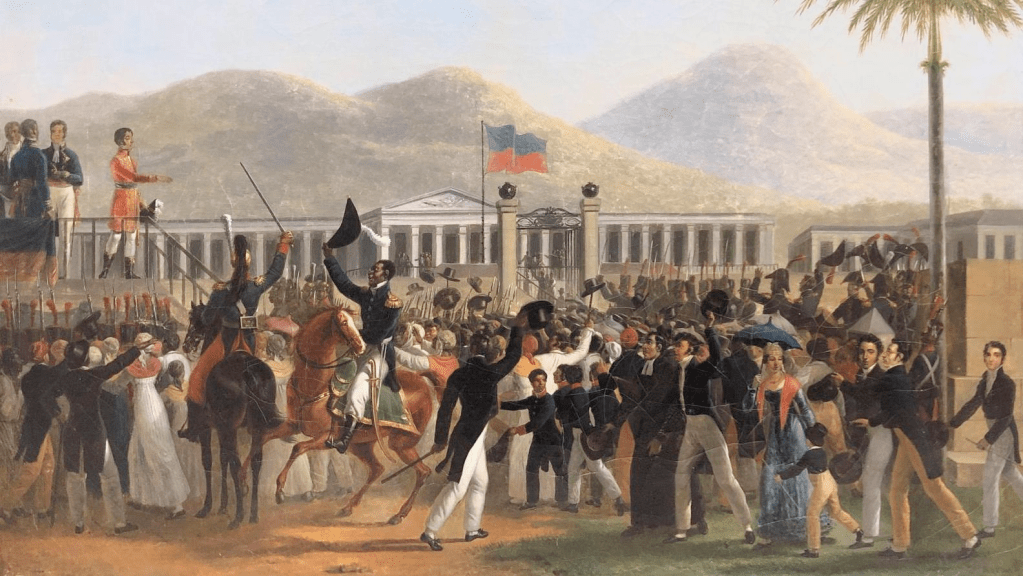
Jean-Pierre Boyer is sworn in as President of western Kiskéyà. Adolphe Roehn, 1818.
FEAR OF A UNITED KISKÉYÀ
The division of Kiskéyà was never inevitable. In the early 19th century, President Jean-Pierre Boyer briefly unified the island, bringing both western and eastern Kiskéyà under a single government. This experiment was short-lived, undone by western imperial pressures and class-based colorist opposition, but it showed the possibility of an undivided Kiskayan state.
Decades later, Emperor Faustin I made a bold attempt to restore that unity. His vision was not merely territorial—it was revolutionary. A reunified Kiskéyà would have stood as a sovereign Afro-Latīné nation, encompassing the entire island, directly challenging both European colonial powers and U.S. ambitions in the region.
The response was swift. Global powers, already wary of western Kiskéyà’s existence, recognized a reunified island as an unacceptable threat. A united Kiskéyà would command strategic position, economic strength, and symbolic power as proof of enduring Black sovereignty in the Caribbean.5 Intervention was immediate, and the project was forced into collapse, eventually resulting in the Emperor’s overthrow in 1859.
As Ernesto Sagás explains, Dominican elites emphasized their Hispanic and Catholic heritage while contrasting themselves with Haitians, who were depicted as African, pagan, and uncivilized.6 This racial mythology became the cornerstone of eastern Kiskéyà’s nationalism, to the point that eastern Kiskayans were being taught in schools that western Kiskayans had engaged in the raping of eastern Kiskayan women during unification.7
Its consequences were violent. Rafael Trujillo’s Parsley Massacre in 1937 killed tens of thousands of western Kiskayans and their descendants. In 2013, the Constitutional Tribunal of eastern Kiskéyà stripped citizenship from thousands of people of western Kiskayan descent. The logic of partition continues: eastern Kiskéyà has repeatedly defined itself through the exclusion of the west.
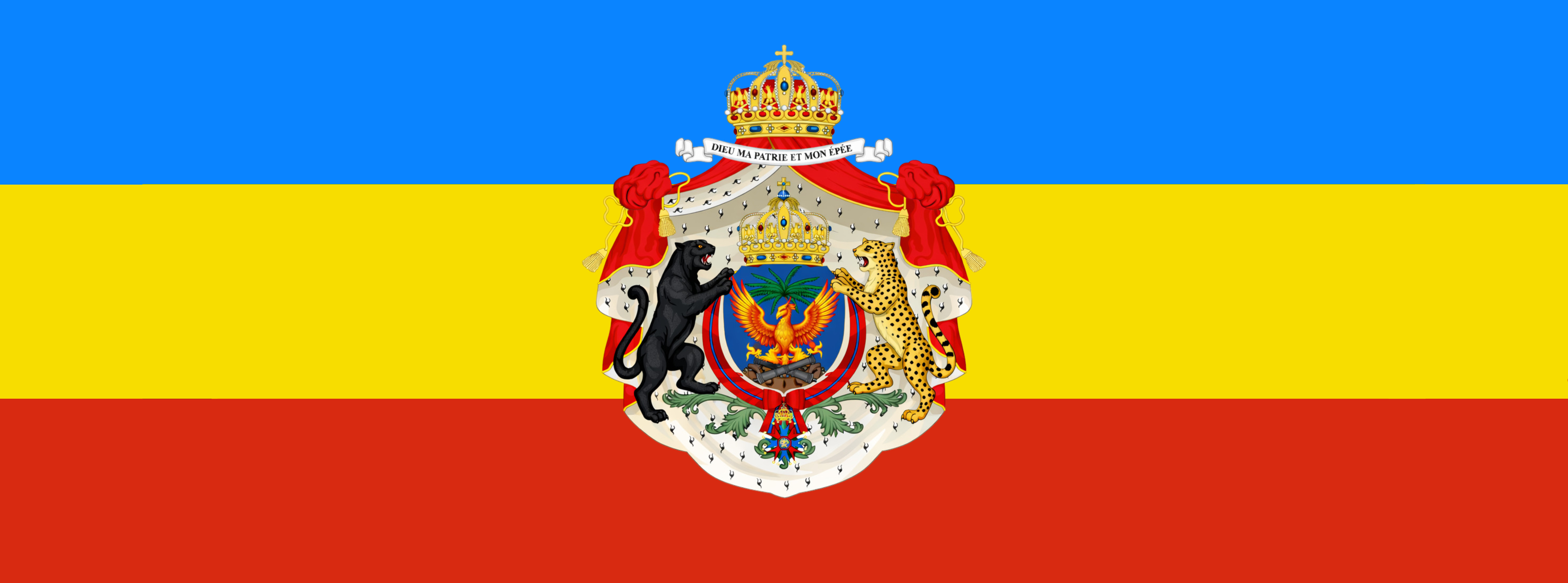
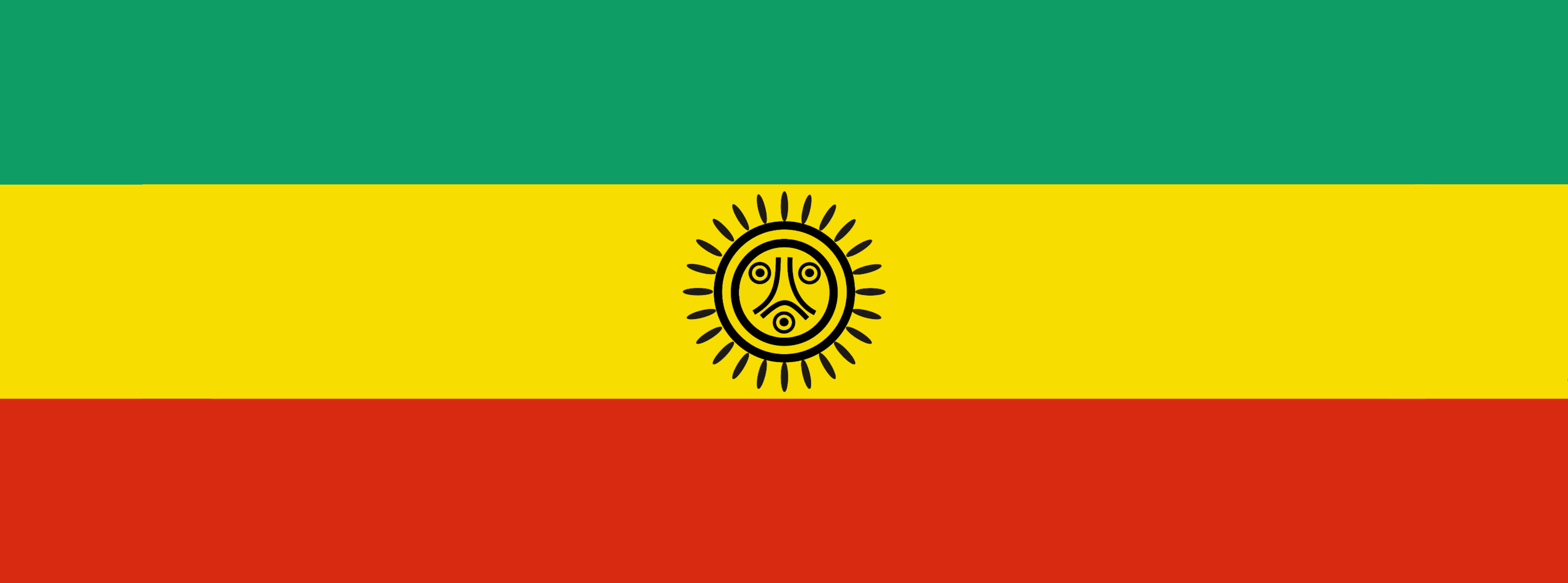
The dual-flag1 of a unified Kingdom of Kiskéyà, as it might have stood had foreign powers not intervened many years ago. The first represents imperial sovereignty, while the second honors the Indigenous Taíno nation that—contrary to popular belief—still endures on both sides of the island, present in distinct communities and in the bloodlines of many Kiskayan families, not to mention the neighboring island of Borikén8 (better known today as Puerto Rico).
This episode underscores why Kiskéyà has been persistently fragmented in both politics and narrative. western Kiskéyà’s revolution was already destabilizing to the global racial order. A reunified island under one flag and one government would have magnified that destabilization exponentially. For colonial and imperial powers, division was not incidental—it was necessary to maintain control.
CUBAN WHITENESS IN MIAMI
The same pattern of anti-Blackness that defines Kiskéyà’s erasure reappears in the diaspora, especially within Cuban exile communities in Miami. The Cuban Revolution of 1959 brought a mass wave of exiles, many of them from wealthier and whiter segments of Cuban society. Once in South Florida, they built a political and economic foothold by aligning with U.S. whiteness as both identity and strategy.
María Cristina García explains that Cuban exiles secured an unusual level of federal assistance and political influence, in part because they presented themselves as middle-class, white, and culturally compatible with Anglo-Americans.9 This framing set them apart from other immigrant groups, allowing them to claim a privileged niche in U.S. racial politics.
But the costs were real. Afro-Cubans, who had long carried the brunt of racial hierarchy on the island, found themselves marginalized again in exile. Alejandro de la Fuente notes how these communities replicated hierarchies that privileged whiteness while marginalizing Black Cubans.10 The exile identity crafted in Miami did not dissolve old inequalities; it reproduced them in a new setting.
Proximity to whiteness became a survival strategy. It delivered access to federal funds, political recognition, and social distinction. Yet it never guaranteed full belonging. Despite their careful performance of whiteness, Cuban Americans remained racialized in the United States. They were granted certain privileges relative to other Latīné groups (as pawns in an anti-communist game played through U.S. foreign policy and little else), but whiteness itself never fully opened to them.
This contradiction reveals the futility of anti-Blackness within the Latīné world. By leaning into whiteness, Cuban exiles fractured their own community, pushing Afro-Cubans to the margins while chasing recognition that could never be absolute. The story of Cuban Miami illustrates what the erasure of western Kiskéyà also shows: anti-Blackness divides, but it does not liberate. It secures neither dignity nor equality.
WHITENING: A REGIONAL PROJECT
The exclusion of Kiskéyà reflects a continental obsession with whitening. From Brazil to Mexico, states promoted European immigration and celebrated mestizaje as a way of improving their populations. As Peter Wade observed, Mestizaje has been the principal ideology of nationhood… but it has functioned less as a recognition of plural origins than as a strategy for whitening.11
Western Kiskéyà does not fit this narrative. Its national identity emerged not through whitening, but through the affirmation of Black Kiskayan identity. Its revolution was not a compromise but a rupture. This is why the Latīné world has found it easier to exclude western Kiskéyà: it stands as living proof that liberation came not from Europe, but from Black Kiskayans who remade the hemisphere on their own terms.
LET’S WRAP IT UP.
The erasure of Kiskéyà from Latin America reveals the depth of anti-Blackness in the region. Eastern Kiskéyà built its nationalism by opposing western Kiskéyà. Cuban exiles in Miami built their influence by clinging to whiteness. In both cases, Latīné identity has too often been defined by distancing itself from Blackness.
This distance distorts history. The revolution in western Kiskéyà was the most transformative event in the Americas. It sparked independence movements across the hemisphere and forced empires to face the reality of Black sovereignty. To exclude it is to erase the very foundation of Latin American freedom.
A truthful identity for Latin America begins with recognition. Kiskéyà is central. The revolution of western Kiskéyà did not just change an island—it changed the world. Until Latīné communities confront their own anti-Blackness and accept this truth, their identity will remain fractured. Whiteness cannot define the region, and neither can division.
The story of separation has been told for nearly two centuries, but separation was never destiny. Kiskéyà is one island, one people, and one history. The border between western and eastern Kiskéyà was carved by colonial powers and elite interests, not by cultural incompatibility. The claim that western and eastern Kiskayans (Haïtians and Dominicans) are fundamentally different peoples is a myth born of antinegritud, colorism, and foreign interference.
Kiskéyà should be unified, peaceful, and prosperous—a single island with three languages (Kreyòl, Français, and Español) under one government. Its strength lies in embracing the fullness of its legacy: Indigenous roots, Black Kiskayans who defined its freedom, and the racially mixed communities embodying its resilience in the face of western imperialism and neo-colonialism.
To speak of Kiskayans as divided by border, language, or culture is to repeat a colonial lie. The reality endures: the people of Kiskéyà are one.12 And to affirm that truth is also to affirm this: western Kiskayans—those we primarily call Haïtians—are Latīné. They have always been, and their struggle and triumph sit at the very heart of a Latin America far Blacker than Univision, Telemundo, or even Globo dare to admit.
Today, this flag—together with its central crest and coat of arms—serves as the personal standard of my own family, descended from the House of Soúlouque (House Vincent de Soúlouque) and tracing a direct paternal bloodline to Jean-Jacques Dessalines. Its continued use reflects the survival of an imperial and revolutionary Kiskayan lineage beyond the nineteenth century, preserved through family memory, naming tradition, and heraldic continuity, and carried forward as an emblem of lineage, continuity, and inherited responsibility. The banner itself draws from the deeper political and cultural strata of Kiskéyà, grounding sovereignty in land, people, and ancestry rather than in later state formations. The tricolor arrangement expresses continuity with the revolutionary era while articulating a broader Kiskayan identity that recognizes the island as a shared civilizational space shaped by African liberation, Indigenous Taíno survival, and creole statecraft. The presence of the imperial crest affirms authority as custodianship rather than conquest, while the heraldic animals and phoenix imagery signal endurance, regeneration, and the transmission of responsibility across generations. This flag functions not as a replacement for modern national banners, but as a family standard that preserves an older political memory—one in which sovereignty was understood as personal, inherited, and bound to moral obligation. It reflects a lineage that carried revolutionary legitimacy into the imperial period and sustained it through dispersal, transition, and survival. In this way, the flag remains active rather than commemorative, marking continuity where formal power dissolved but identity endured. Put simply, when you see that seal, you know I’m nearby.