
Chag Pesach Sameach!
A message of liberation to all who celebrate.

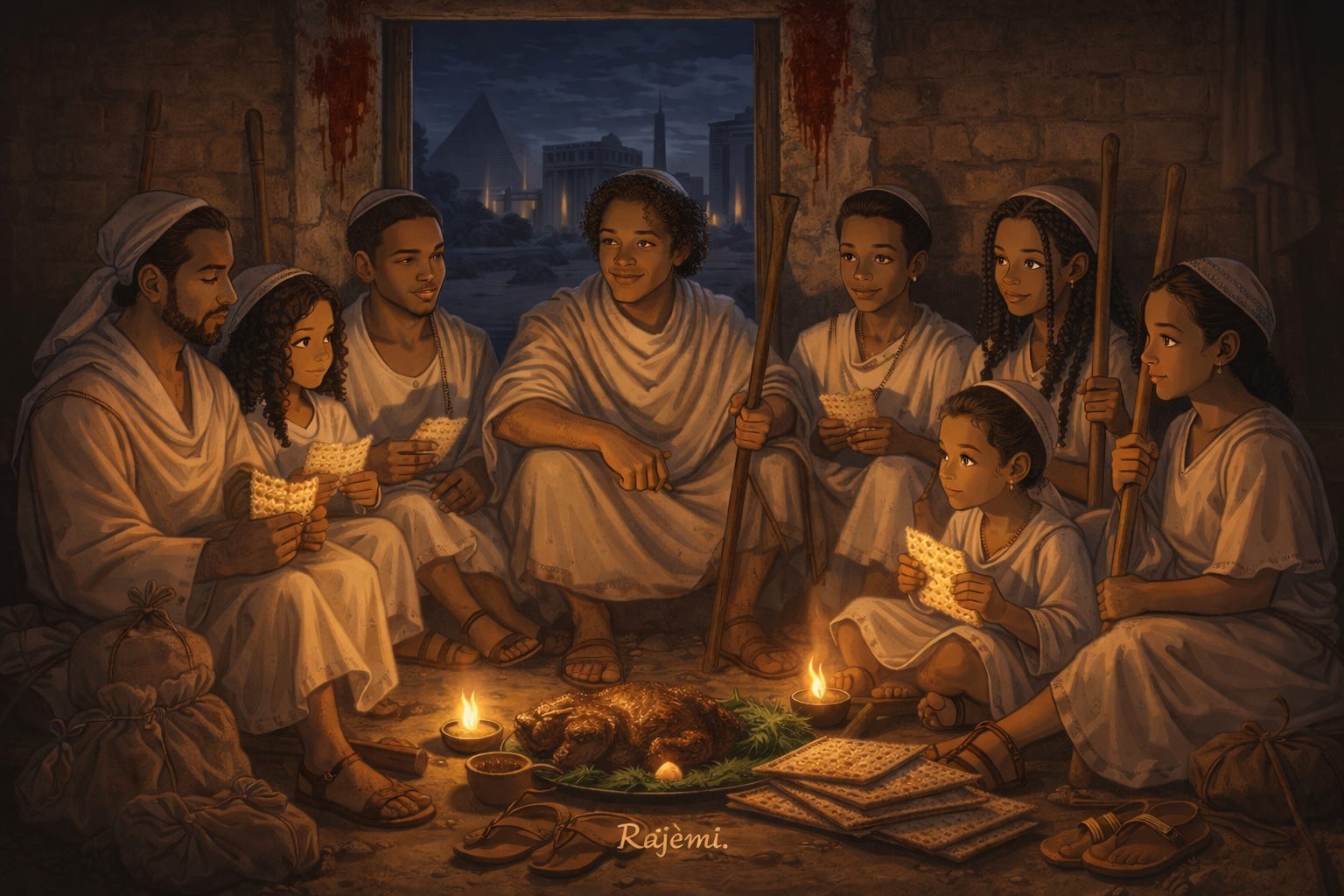
Shalom to my beloved brothers and sisters in the faith, and to every soul willing to receive these words in sincerity and goodwill.
Friends, why is this night different from all other nights?
מַה נִּשְׁתַּנָּה, הַלַּיְלָה הַזֶּה מִכָּל הַלֵּילוֹת?
The question that begins our Seder does more than guide children through ritual. It invites the entire community into sacred memory. It calls each of us to see ourselves as participants in the Exodus, not as distant observers of an ancient story.
Pesach פֶּסַח commemorates the departure of the ancient Hebrews from Misraim, the house of bondage, and the beginning of a journey toward covenantal nationhood. The Torah recounts oppression, resistance, divine intervention, and the birth of a people shaped by law and responsibility.
The plagues confront tyranny. The splitting of the sea affirms that liberation unfolds through courage and faith. The wilderness teaches discipline. The destination, the land known in antiquity as Canaan and today as Palestine, becomes the setting for a society tasked with embodying justice and holiness.
Pesach is therefore a festival of freedom grounded in accountability. We eat matzah, the bread of affliction, to remember haste and vulnerability. We taste maror to recall bitterness.
We recount suffering so that memory becomes moral instruction. The Haggadah commands us to tell the story as though we ourselves left Egypt. This is spiritual pedagogy. It ensures that freedom never becomes abstract.
To my fellow Jews, Pesach affirms our enduring covenantal identity. We are a people shaped by deliverance and commanded to pursue righteousness. The God who heard the cry of our ancestors hears every cry.
The Exodus establishes a theological principle: oppression is neither sacred nor permanent. Power is accountable. Liberation is possible.
To all who read these words, regardless of faith, Pesach carries universal meaning. Every human being የሰው ልጆች is worthy of dignity. Every community longs for safety, self-determination, and peace.
The narrative of slavery and deliverance resonates wherever injustice persists. The memory of Misraim calls us to confront present realities with moral clarity.
The land at the heart of our ancient story remains a land of living peoples and layered histories. Many Palestinian families who have dwelled there for generations continue to seek security, stability, and self-governance.
Pesach memory requires empathy. The Exodus teaches that displacement wounds deeply and that freedom cannot be reserved for one people alone. The God of Israel does not ignore suffering.
As we gather for the Seder this year, let our tables be spaces of joy and seriousness. Let questions be welcomed. Let children be encouraged to ask boldly. Let songs rise with sincerity. Let the four cups of redemption remind us that liberation unfolds in stages and demands perseverance.
From Ethiopia to Hebron, from Jersey City to Jerusalem, from Paris to Palestine, may this Pesach bring reflection and renewal. May homes be filled with warmth. May the lonely find companionship. May those living under fear encounter protection. May leaders act with wisdom and restraint.
Pesach does not conclude with the closing of the Haggadah. Its message continues into daily conduct. It calls for ethical speech, economic fairness, hospitality to the stranger, and solidarity with the vulnerable. Liberation without responsibility collapses into chaos. Freedom guided by Torah builds community.
May this Pesach strengthen your faith. May it deepen your compassion. May it renew your commitment to justice. May the promise of עוֹלָם הַבָּא steady your spirit with enduring hope.
Chag Pesach Sameach. May this year’s festival of liberation illuminate your path and guide us all toward a world where dignity, peace, and accountability define our shared future.
With love, shared reverence, and solidarity,
Ramíel ben-Yefeh Sālúq
שַׂר רָמִיאֵל בֶּן יֶפֶה גַּלְיָה מִבֵּית סָלוּק הַבְּרוּקְלִינִי הַכִּישְׁכָּיִי