
MICHAEL: PART V
The King of Pop triumphantly moves into the 2000s.

The 2000s in this timeline represent Michael Jackson’s complete dominance as a cultural icon, business mogul, and humanitarian. Freed from the scandals and health crises that plagued him in our timeline, Michael uses the decade to push the boundaries of his artistry, solidify his financial legacy, and become a leader in global philanthropy.
With his influence extending across music, film, business, and activism, Michael evolves into a figure larger than life, reshaping industries and inspiring a new generation.
2000–2001: A New Millennium, A Renewed Vision
As the new millennium begins, Michael embarks on a transformative phase of his career, marked by bold business ventures, creative milestones, and groundbreaking philanthropic efforts.
With full ownership of Motown Records and BET, the release of Invincible, and a deep commitment to global causes, Michael proves his relevance and influence remain unparalleled as he transitions into a new era.
Full Control of Motown and BET
By 2000, Michael has gained complete ownership of Motown Records, the legendary label that launched countless careers, including his own with the Jackson Five. As chairman and CEO, Michael modernizes Motown, revitalizing its brand and expanding its influence in contemporary music.
With a focus on Hip-Hop, R&B, and Pop, Michael positions the label as a platform for emerging talent while continuing to honor its rich legacy. His efforts lead to the signing of groundbreaking artists who bring fresh perspectives to the industry, ensuring Motown remains a vital force in music. At the same time, Michael becomes the sole owner of BET (Black Entertainment Television).
Under his stewardship, the network undergoes a renaissance, focusing on authentic storytelling, diverse programming, and socially conscious content. BET becomes a platform for celebrating Black culture, elevating underrepresented voices, and challenging stereotypes.
Michael’s leadership ensures the network retains its integrity as a Black-owned enterprise, setting a powerful example of cultural and economic empowerment.
Invincible
In October 2001, Michael releases Invincible, his first studio album in six years. The album combines his signature pop sensibilities with cutting-edge production, featuring contributions from top producers like Rodney “Darkchild” Jerkins.
Songs like You Rock My World, Butterflies, and Speechless showcase Michael’s unmatched ability to evolve with the times while staying true to his artistic identity.
Critics praise Invincible for its lush production and emotional depth, calling it a testament to Michael’s enduring talent and creativity. The album earns Michael his fourth Grammy Award for Best Album, solidifying its place as one of his greatest achievements.
Fans embrace the album as a bold statement from an artist who, even decades into his career, remains at the forefront of music innovation. Invincible sells 20 million copies worldwide, further cementing Michael’s legacy as one of the most successful musicians of all time.
The album’s release is accompanied by a series of visually stunning music videos, including the cinematic masterpiece You Rock My World, which features appearances by The Notorious B.I.G., Chris Tucker, and Marlon Brando.
The videos reaffirm Michael’s reputation as a pioneer in blending music and visual storytelling, pushing the boundaries of the medium to new heights.
Philanthropy and Global Impact
Michael’s commitment to philanthropy reaches new heights in the early 2000s. Partnering with the newly-inaugurated Gore-Bradley Administration, he plays a pivotal role in funding early interventions for global health crises.
His contributions help advance groundbreaking research and public health campaigns, culminating in the official announcement of the eradication of HIV/AIDS in 2001.
This historic achievement stands as a testament to Michael’s dedication to leveraging his platform and resources to address urgent global challenges.
In addition to his work in public health, Michael continues his advocacy for environmental causes. Collaborating with leading organizations, he champions initiatives to combat climate change and promote sustainable development, efforts that are recognized by recently-inaugurated President Al Gore.1
His efforts include funding reforestation projects, supporting clean energy innovations, and raising awareness through his music and public appearances. These initiatives lay the groundwork for future campaigns, further cementing his legacy as a global humanitarian.
In 2001, Michael makes a touching and unforgettable appearance at the 40th birthday celebration of Princess Diana, who remains an influential figure in global humanitarian efforts.2
Held in London, the event brings together world leaders, celebrities, and philanthropists to honor Diana’s enduring impact on charitable causes. Michael surprises the audience with an intimate serenade, performing a special rendition of Butterflies from his Invincible album, with modified lyrics dedicated to the Princess.
The heartfelt performance resonates deeply with those in attendance, symbolizing Michael’s enduring friendship with Diana and their shared commitment to using their fame for the betterment of the world. The moment is widely celebrated in global media, with images of Diana’s emotional response capturing headlines as a symbol of grace, hope, and unity.
Through this powerful gesture, Michael reinforces his role as both an artist and a humanitarian, connecting with audiences on an emotional level while celebrating a friendship rooted in mutual compassion and dedication to philanthropy. This period solidifies Michael’s evolution into a global statesman, transcending entertainment to inspire change on the world stage.
2002–2003: The Entertainer and the Entrepreneur
The years 2002 and 2003 showcase Michael’s ability to balance his unparalleled artistic prowess with groundbreaking entrepreneurial ventures. From his captivating performance in Peter Pan to his strategic investments in emerging industries, Michael continues to redefine success and influence as both an entertainer and a cultural leader.
These years also highlight his commitment to fostering unity and innovation in the music industry, as he bridges generational and cultural divides through his work.
A Dream Realized
In 2002, Michael fulfills a lifelong dream by starring as the titular character in Peter Pan, a live-action adaptation of J.M. Barrie’s beloved tale. The film resonates deeply with audiences, celebrating themes of imagination, innocence, and the joy of never growing up—ideas that have always been central to Michael’s artistic vision.
His performance as Peter is both heartfelt and magnetic, capturing the wonder and vulnerability of the character while adding his own signature charm. Directed by an acclaimed visionary, the film grossed over $650 million worldwide, becoming one of the year’s highest-grossing and most celebrated films.
Critics praise Michael’s portrayal for its emotional depth and sincerity, hailing it as one of his finest performances. The role earns him a Golden Globe Award for Best Actor, further solidifying his place as a versatile entertainer capable of captivating audiences on both stage and screen.
The film’s legacy is immortalized at the 2003 Academy Awards when Michael receives his first Oscar for Best Original Song for Childhood, a deeply personal ballad featured on the Peter Pan soundtrack. Michael’s live performance of the song during the ceremony is a breathtaking moment of vulnerability and artistry.
Accompanied by a children’s choir and an ethereal orchestral arrangement, Michael delivers a poignant rendition of Childhood that leaves the audience in awe. Critics and viewers describe the performance as “magical” and “transcendent,” with the emotional weight of the song resonating across the globe.
Accepting the Oscar moments later, Michael delivers a heartfelt speech, dedicating the award to “the child in all of us” and reflecting on his lifelong desire to inspire joy and wonder. For Michael, the award marks not just a career milestone but a deeply personal triumph, cementing Peter Pan and Childhood as integral parts of his creative legacy.
That same year, Michael makes a memorable cameo in Men In Black II, starring Will Smith. The cameo, playful and self-aware, showcases Michael’s humor and willingness to embrace his larger-than-life persona in new and unexpected ways. The film’s success adds yet another dimension to Michael’s growing filmography, demonstrating his ability to seamlessly blend artistry, charm, and versatility across mediums.
Celebrating Motown
In 2003, Michael headlines the Motown 50 celebration, airing on BET, to honor the label that launched his career. The event features electrifying performances from Michael and a historic reunion of still-living former rivals Tupac Shakur and B.I.G., both now signed to Motown.
Their collaborative performance is hailed as a watershed moment in music, symbolizing reconciliation and unity within the hip-hop community. Michael’s performances at the celebration remind audiences of his deep connection to Motown’s legacy while reaffirming his place as a cultural icon.
As chairman of the label, Michael uses the event to spotlight emerging talent and set the tone for Motown’s future, ensuring it remains a vital force in the industry, especially with the event taking place at Madison Square Garden.
The Neverland Empire Expands
During these years, Michael’s entrepreneurial vision reaches new heights. With investments in technology startups, real estate, and green energy initiatives, Michael solidifies his position as one of the wealthiest entertainers in history.
His focus on sustainable development aligns with his long-standing commitment to environmental causes, as he channels his resources into projects that promote renewable energy and combat climate change.
By 2003, Michael’s net worth surpasses $2 billion, making him a trailblazer in leveraging artistic success into financial empire-building. His influence as an entrepreneur extends beyond the entertainment world, positioning him as a thought leader in innovation and philanthropy.
2004–2010: The King of Pop on the World Stage
The years 2004 to 2009 represent a period of extraordinary achievement and reinvention for Michael. As he balances his roles as an artist, philanthropist, entrepreneur, and family man, Michael continues to dominate the global stage.
From cinematic triumphs and chart-topping music to groundbreaking environmental and humanitarian initiatives, this era solidifies Michael’s legacy as one of the most influential figures of all time.
Captain EO III
In 2004, Michael releases Captain EO III, the climactic installment of the groundbreaking science-fiction franchise that began in the 1980s. Directed by a team of visionary filmmakers, the film blends state-of-the-art visual effects with a poignant narrative about hope, unity, and resilience.
Michael’s reprisal as the titular Captain EO is both heartfelt and commanding, showcasing his ability to transcend mediums with ease. The film is a box office juggernaut, grossing $750 million worldwide and earning universal acclaim for its imaginative storytelling and emotional depth.
The accompanying soundtrack, a seamless blend of cinematic orchestration and Michael’s signature sound, debuts at #1 on the Billboard charts. The album’s success reaffirms Michael’s musical dominance and cements Captain EO III as a cultural milestone.
The Earth Song Initiative
Michael’s commitment to environmental causes takes center stage during this period with the launch of the Earth Song Initiative in 2004. Partnering with the United Nations, Michael spearheads a global campaign to combat climate change, focusing on raising awareness and funding for environmental protection and sustainability efforts.
Through benefit concerts, media campaigns, and high-profile collaborations, the initiative raises billions of dollars, funding reforestation projects, clean energy programs, and wildlife conservation efforts. Michael’s song Earth Song becomes the anthem of the movement, inspiring millions to take action.
His leadership earns him recognition from global leaders, and he becomes a sought-after speaker at international forums, addressing critical issues like environmental justice and sustainable development.
Family Life and Personal Milestones
Throughout this period, Michael’s family life remains a cornerstone of his identity. In 2006, Michael delivers a surprise performance during halftime of the FIFA World Cup Final in Berlin, electrifying the global audience with a medley of his greatest hits.
His set includes Beat It, Black or White, Earth Song, and You Rock My World, blending his iconic choreography with a powerful message of unity and hope that resonates deeply with the international crowd. The performance is hailed as one of the greatest halftime shows in sporting history, further cementing Michael’s status as a global cultural ambassador.
After his stunning performance, Michael, his wife Brooke Shields, and their four children settle in to watch the remainder of the match, a thrilling showdown between France and Italy.
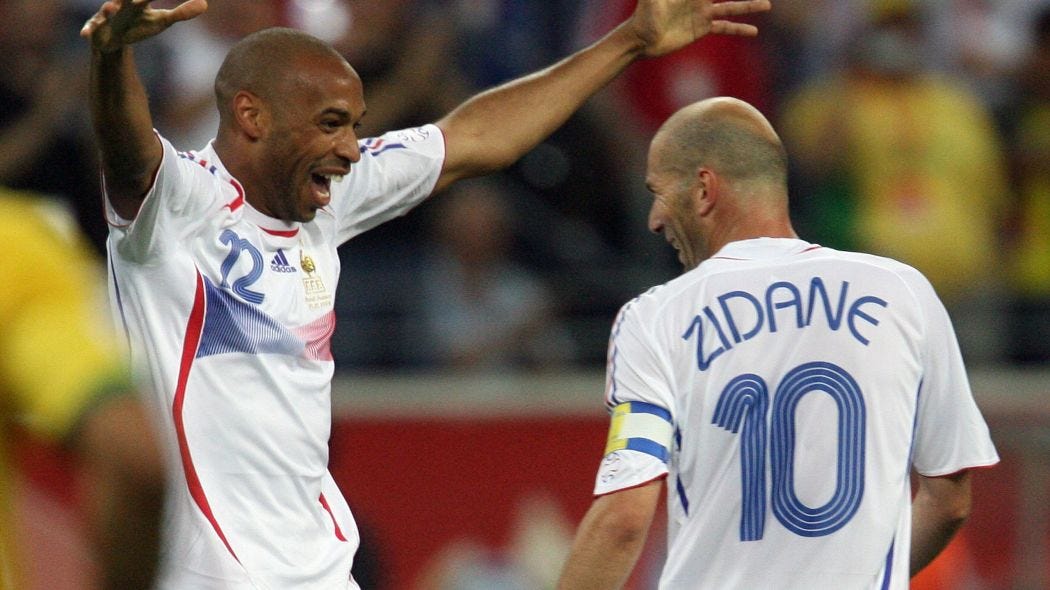
In an unforgettable moment, Thierry Henry scores a miraculous volley in the 120th minute of extra time, clinching a 3-2 victory for France and securing their second World Cup title in eight years. Michael and his family join the jubilant celebrations in the stadium, soaking in the energy of the historic triumph alongside tens of thousands of passionate fans.
Two years later, in 2008, Michael and Brooke celebrate their 20th wedding anniversary, surrounded by their children and extended family. Their enduring love and stable home life become a symbol of Michael’s transformation from a child star to a fulfilled adult.
The Jackson family is also in attendance as Hillary Clinton is sworn in as President of the United States, alongside her running mate Barack Obama,3 marking yet another historic moment in Michael’s journey as both a cultural icon and devoted family man.
Stay With Me In Wonderland
As the decade concludes, Michael collaborates with Japanese pop star Kumi Koda on the duet single Stay With Me for her album Trick, released in 2009. The soulful track, blending Michael’s iconic sound with Kumi’s contemporary pop style, becomes an instant success, resonating with audiences across continents. The song’s global popularity propels Trick to Diamond certification, cementing its status as a Japanese classic.
Critics praise Stay With Me as a masterful blend of East and West, showcasing Michael’s enduring appeal and ability to adapt to evolving musical landscapes. Fifteen years later, the song experiences an unexpected resurgence, becoming a viral sensation on social media, introducing Michael and Kumi’s collaboration to a new generation of fans and reaffirming its timeless appeal.
That same year, Michael stars as the Mad Hatter in Alice in Wonderland, a critically acclaimed adaptation of Lewis Carroll’s beloved tale. Directed by Tim Burton, the film is a visually stunning reimagining that captures audiences worldwide, grossing $1.85 billion to become one of the highest-grossing films of all time.
Michael’s whimsical yet poignant portrayal of the Mad Hatter earns widespread acclaim, with critics lauding his ability to balance eccentricity and emotional depth. His performance stands out as both playful and haunting, earning him his second Golden Globe award of the decade, solidifying his reputation as a versatile and accomplished actor.
By the end of the 2000s, Michael is no longer just the King of Pop—he is a global institution. His music dominates charts, his films break box office records, and his collaborations continue to redefine artistic boundaries. At the same time, Michael’s business ventures and philanthropic efforts reshape industries and improve lives around the world.
As the decade ends, Michael stands as one of the most influential figures of the modern era, embodying the power of creativity, resilience, and vision. Entering the 2010s, Michael is poised to continue breaking barriers, inspiring millions, and leaving an indelible mark on generations to come.
Are you ready for the 2010s?
Here’s another deviation from the main timeline: First, Elián González is not repatriated to Cuba. Vice President Al Gore publicly supports legislation granting González permanent residency in the United States, aligning himself decisively with Cuban-American sentiment in Florida. This position generates substantial goodwill within the Cuban-American electorate and contributes to a decisive Democratic victory in Florida in November 2000, along with a concurrent Democratic majority in the Florida State Legislature. Running alongside Senator Bill Bradley (D–NJ), Gore defeats the Republican ticket of Senator John McCain (R–AZ) and former Senator Elizabeth Dole (R–NC), becoming the 43rd President of the United States and succeeding President Bill Clinton in January 2001. In parallel developments, the absence of the Monica Lewinsky scandal enables President Clinton to conclude his second term with a 69 percent approval rating, surpassing Ronald Reagan’s 63 percent exit approval benchmark. Additionally, the Glass-Steagall Act remains intact, avoiding repeal. Meanwhile, the Green Party ticket of Ralph Nader and Winona LaDuke secures approximately 6 percent of the national popular vote, thereby qualifying for federal matching funds and solidifying the Green Party’s status as a durable third-party vehicle for left-wing political organizing. The party’s strongest electoral showings occur in California, New York, Michigan, Illinois, and Arizona, with particularly large vote totals emerging from heavily Democratic states such as California and New York.
Diana, Princess of Wales, is never involved in the 31 August 1997 car crash in Paris. The accident occurs without her presence, and she survives the period without injury. As a result, Diana continues her public life, sustaining and expanding her humanitarian work in areas such as landmine eradication, HIV/AIDS advocacy, and global child welfare. Her enduring international stature strengthens her influence within charitable, diplomatic, and cultural spheres well into the twenty-first century, and she lives a long, healthy, and publicly engaged life.
Senator and former First Lady Hillary Rodham Clinton narrowly defeats Senator Barack Obama in the Democratic presidential primaries, securing the party’s nomination. In a historic consolidation of party leadership, Clinton selects Obama as her vice-presidential running mate, forming the first major-party ticket composed of a woman and an African American nominee in the top two positions. The Clinton/Obama ticket decisively defeats the Republican slate of former Massachusetts Governor Mitt Romney and former Arkansas Governor Mike Huckabee in the 2008 general election. President Clinton subsequently serves two successful terms, maintaining the relative domestic stability and international equilibrium established during the Gore administration. In 2016, Vice President Obama wins the presidency in a landslide victory, assuming office in January 2017 and extending the Democratic governing era into a new political generation.